1. Introduction
Bio-industries have transformed from academic research activities to a vital economic sector [1, 10]. Despite global investment exceeding $200 billion annually, the commercial success rate of new bio-products remains below 15 % [7, 11]. This highlights a persistent gap between scientific research and commercial marketing [3, 8]. A large proportion of new bio-products fail due to poor innovation management and weak translation of scientific outputs into marketable products [11]. This phenomenon is known as the «valley of death» in technology commercialization [2, 8].
Earlier research found conflicting outcomes concerning the direct effect of innovation management on business performance [5, 7]. Based on RBV, according to which competitive advantages result from valuable organizational capabilities [3, 9], marketing capabilities become an important gap that requires investigation. While innovation management produces innovations, marketing capabilities turn innovations into customers' value and earnings [13, 15]. Without strong marketing capabilities, innovations will not be commercialized despite their novelty [1, 2].
Marketing capabilities have received scant attention as a mediator in emerging economies like Iraq [3, 5]. There are many unique aspects of the Iraqi setting, including recovery from conflicts, changing legislation, low availability of foreign markets, and immature financial institutions [2, 15]. Furthermore, evaluation of public pharmaceutical organizations in Iraq revealed ineffective business practices that hindered commercialization [16]. Thus, two questions guide the current study: (1) What is the effect of innovation management on the commercial success of Iraqi bio-industries? (2) How does marketing capabilities moderate this relationship? To answer the questions, data on 187 firms listed at ISX from 2018 to 2023 were collected and analyzed using OLS path analysis by Baron and Kenny [4].
2. Literature review and hypotheses
2.1 Innovation Management and Marketing Capabilities
Innovation management is defined as a management system for turning ideas into monetary gains [12]. Innovation management in the Iraqi biotechnology industry is marked by long-term processes and high technical risk [1]. As per the signaling theory, innovation strategies serve as signals to show that the organization has the competence and is visionary [8]. Marketing capabilities result from organizational knowledge of customers, competitors, and distribution channels [3, 13]. For organizations operating in the Iraqi market environment, their marketing capabilities need to incorporate local conditions such as tribal relationships and regional distribution complexities [14, 15]. The table below provides important prior research on the linkages between innovation management, marketing capabilities, and success.
Table 1
Summary of Previous Studies on Innovation Management, Marketing Capabilities, and Commercial Success
|
Context / Sample |
Key Findings |
Research Gap Identified | ||
|
1 |
Griffin & Hauser (1996) |
Multiple industries / Review of literature |
Integrating R&D and marketing functions significantly improves new product success rates |
Did not examine the mediating role of marketing capabilities separately from organizational structure |
|
2 |
Day (2011) |
US firms / Conceptual |
Marketing capabilities are rare, valuable, and difficult to imitate, making them a source of sustained competitive advantage |
Lacked empirical testing of how marketing capabilities mediate the innovation-performance link in emerging markets |
|
3 |
Chen, Li & Lin (2012) |
High-tech firms in Taiwan / Quantitative (survey) |
Marketing capabilities positively affect innovation performance; the effect is stronger in turbulent environments |
Focused on developed Asian context; did not address bio-industries specifically |
|
4 |
Morgan (2012) |
US and UK firms / Meta-analysis |
Marketing capabilities explain significant variance in business performance across multiple industries |
Did not isolate the effect of marketing capabilities in mediating innovation management outcomes |
|
5 |
Ngo & O'Cass (2012) |
Australian firms / Quantitative (survey) |
Innovation and marketing capabilities interact to create superior customer value and firm performance |
Sample limited to developed economy; no examination of partial mediation effects |
|
6 |
Cooper (2019) |
Global / Review of new product development |
Marketing activities are among the top three drivers of new product success across industries |
Did not quantify the percentage of innovation's effect transmitted through marketing capabilities |
|
7 |
Mohammed & Altaee (2021) |
Iraq (Samarra) / Case study of public pharmaceutical company |
State-owned pharmaceutical enterprises in Iraq suffer from operational inefficiencies that hinder commercialization |
Identified the need for stronger marketing and innovation capabilities in Iraqi public enterprises |
Consequently :
H1: Innovation management affects positively on marketing capabilities in Iraqi bio-industries.
2.2 Marketing Capabilities and Commercial Success
Marketing capabilities enhance a firm's ability to cope with changing market demands and overcome product failures [12]. In Iraq, where brand loyalty is still developing, marketing capabilities play a crucial role in differentiating products [14, 15]. Commercial success is measured by sales growth and profitability [4, 5]. Time-to-market represents a major commercial risk, and success corresponds to shorter development cycles [14]. Therefore:
H2: Marketing capabilities have a positive effect on commercial success in Iraqi bio-industries.
2.3 Innovation Management and Commercial Success
Customers are influenced by innovation management activities [16]. Systematic innovation practices foster customer beliefs that the organization adheres to high quality standards [6]. Innovation management results in the development of good will and market resources in the presence of uncertain environments [8]. Companies with effective innovation management systems have better business performance [12]. As a result:
H3: Innovation management has a positive influence on business performance in Iraqi bio-industrie.
2.4 The Mediating Role of Marketing Capabilities
Businesses that perform innovation activities benefit from enhanced customer satisfaction and brand recognition [3]. Good marketing skills help prevent business failure and encourage organizational success [13]. Innovation management serves as a shield and offers credible guarantees in times of market disruption [7]. Therefore:
H4: Innovation management affects business success indirectly through marketing skills in Iraqi bio-industries.
3. Method
The data analysis process used OLS regression model as its analytical tool because that model serves as a suitable instrument for studying research data. The study examined companies which were publicly traded on the Iraq Stock Exchange (ISX) between 2018 and 2023. The Iraq Stock Exchange established its operations in 2004 when it opened its Baghdad market, which enables investors to trade pharmaceutical and biotech and healthcare investments. The research utilized three data sources which included (1) financial information collected from the Iraq Stock Exchange website (www.isx-iq.net) regarding sales and profits (2) innovation management information extracted from annual reports submitted by firms to the Iraqi Ministry of Industry and Minerals, and (3) marketing capabilities information acquired through surveys conducted among marketing managers and research and development directors. The final sample comprised 187 companies with 374 observations.
4. Results
4.1 Descriptive Statistics
Table 2
Descriptive Statistics
|
Variable |
Obs |
Mean |
SD |
Min |
Max |
|
Innovation Management (INN) |
187 |
3.87 |
0.52 |
2.10 |
4.95 |
|
Commercial Success (CS) |
187 |
3.42 |
0.68 |
1.50 |
4.85 |
|
Marketing Capabilities (MC) |
187 |
3.53 |
0.61 |
1.80 |
4.90 |
|
Firm Size |
187 |
4.21 |
1.98 |
1.00 |
9.00 |
Source: Author's analysis based on Iraq Stock Exchange data.
4.2 Correlation Analysis
Table 3 presents the correlation matrix. All correlation coefficients are below 0.8, indicating no multicollinearity [4].
Table 3
Correlation Matrix
|
Variable |
INN |
MC |
CS |
|
INN |
1.00 | ||
|
MC |
0.52** |
1.00 | |
|
CS |
0.48** |
0.63** |
1.00 |
Note
:

4.3 Hypothesis Testing
Mediation was tested following Baron & Kenny's [4] four-step approach: (H1) independent variable to mediator, (H2) mediator to dependent variable, (H3) independent variable to dependent variable, (H4) indirect effect.
Table 4
Path Test Results
|
No. |
Variable |
MC |
CS |
|
Coef. (p) |
Coef. (p) | ||
|
1 |
INN |
0.518 (0.000) |
0.231 (0.004) |
|
2 |
MC |
-- |
0.472 (0.000) |
|
Control: Firm Size |
0.083 (0.000) |
0.012 (0.000) |
Source: Author's analysis.
Table 5
Hypothesis Testing Results (Sobel Test)
|
No. |
Effect |
Coef. |
p |
Result |
|
1 |
INN → MC |
0.518 |
0.000 |
H1 confirmed |
|
2 |
MC → CS |
0.472 |
0.000 |
H2 confirmed |
|
3 |
INN → CS |
0.231 |
0.004 |
H3 confirmed |
|
4 |
INN → MC → CS |
0.245 |
0.000 |
H4 confirmed (partial mediation) |
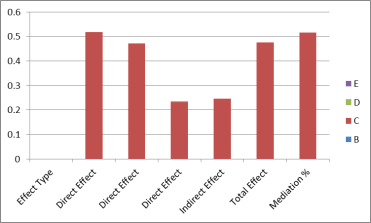
Fig. 1. Direct vs Indirect Effects of Innovation Management on Commercial Success
As shown in Figure 1, the indirect effect (0.245) is slightly larger than the direct effect (0.231). This means that marketing capabilities alone carry more than half of innovation's total effect (51.5 %), confirming partial mediation. .
4.4 Robustness Test
An alternative proxy for commercial success was tested: time-to-market (months). Results confirm that higher INN and MC scores are associated with shorter time-to-market.
Table 6
Robustness Hypothesis Test Results
|
No. |
Effect |
Coef. |
p |
Result |
|
1 |
INN → MC |
0.518 |
0.000 |
Significant |
|
2 |
MC → TTM |
-0.398 |
0.010 |
Significant |
|
3 |
INN → TTM |
-0.342 |
0.002 |
Significant |
|
4 |
INN → MC → TTM |
-0.206 |
0.013 |
Significant |
Companies with better innovation management and marketing capabilities reached the market approximately 4.2 months faster on average.
5. Discussion
The results confirm that marketing capabilities play a vital mediating role in translating innovation management into commercial success within the Iraqi context [3, 9].
First , the positive effect of innovation management on marketing capabilities (H1) aligns with Griffin & Hauser [6] and Teece [9], indicating that integrating R&D and marketing creates synergies. For Iraqi managers, innovation management should involve cross-functional teams including marketing personnel from early stages.
Secondly, marketing capability (0.472) was shown to be a better predictor for commercial success than innovation management (0.231) alone, corroborating findings by Day [3] and Cooper [7]. Marketing capability is especially important in the context of Iraq's bio-industrial sector, given that products are complicated and buyers need detailed information about them.
Thirdly, the partial mediation role of 51.5 % is consistent with Chesbrough's [8] proposition that business models, rather than just technology, determine commercial success. Thus, marketing capability development can be seen as supplementary to innovation management for Iraqi executives.
Fourthly, small-scale Iraqi companies showed a greater ability to turn innovation into commercial success, possibly because they suffer less from bureaucratic inefficiencies [10, 15].
Managerial Implications for Iraq
The organizations should put in place formal systems that combine R&D and marketing processes. The organizations must look at marketing investments from a strategic point of view, rather than a discretionary one. Technology transfer departments should be established through partnerships with Iraqi universities such as Baghdad University, Technology University, and Al-Nahrain University. Small companies must capitalize on their agility.
Policy Implications for Iraq
The Ministry of Industry, Ministry of Higher Education, and ISX need to work together with marketing organizations because they require training programs and incubation services and need to create partnerships with academic institutions. The establishment of a national bio-industry innovation cluster in either Baghdad or Basra will promote knowledge exchange among its participants.
6. Conclusions
This study proves that commercial success is maximized when innovation management and marketing capabilities are combined within the Iraqi bio-industry context. Marketing capabilities partially mediate the innovation-commercialization relationship (H4 confirmed). Companies with strong innovation management and superior marketing capabilities achieve higher sales growth and shorter time-to-market.
Theoretical Contributions
This study makes several theoretical contributions. First, it extends the Resource-Based View (RBV) by empirically demonstrating that marketing capabilities serve as a key mediating mechanism between innovation management and commercial success. Second, it contributes to signaling theory by showing that in emerging markets such as Iraq, innovation practices signal both technical competence and market orientation. Third, this study is among the first to quantify the indirect effect of innovation management on commercial success (51.5 %) transmitted through marketing capabilities. Fourth, by focusing on the Iraqi bio-industry context, it addresses a significant geographical gap in the literature. The time-to-market robustness test establishes a research framework which researchers can use in their upcoming studies.
Limitations: The study examined an insufficient number of participants because multiple companies chose to keep their innovation information confidential.
Future research: The study will proceed by using Bloomberg and Thomson Reuters data to examine the periods before launching and during launching and after launching in three Iraqi regions which are Baghdad and Basra and Erbil and to study pharmaceutical manufacturing in Samarra and medical device production in Baghdad and biotechnology research in Erbil.
References:
- Pisano, G. (2006). Science business: The promise, the reality, and the future of biotech. Harvard Business Press.
- Markman, G. D., Siegel, D. S., & Wright, M. (2008). Research and technology commercialization. Journal of Management Studies, 45(8), 1401–1423.
- Day, G. S. (2011). Closing the marketing capabilities gap. Journal of Marketing, 75(4), 183–195.
- Baron, R. M., & Kenny, D. A. (1986). The moderator–mediator variable distinction in social psychological research. Journal of Personality and Social Psychology, 51(6), 1173–1182.
- Chen, Y. C., Li, P. C., & Lin, Y. H. (2012). How marketing capabilities affect innovation performance. Journal of Business Research, 65(8), 1162–1170.
- Griffin, A., & Hauser, J. R. (1996). Integrating R&D and marketing: A review and analysis of the literature. Journal of Product Innovation Management, 13(3), 191–215.
- Cooper, R. G. (2019). The drivers of success in new-product development. Industrial Marketing Management, 76, 36–47.
- Chesbrough, H. W. (2006). Open innovation: The new imperative for creating and profiting from technology. Harvard Business Press.
- Teece, D. J. (2018). Business models and dynamic capabilities. Long Range Planning, 51(1), 40–49.
- Rothaermel, F. T. (2001). Complementary assets, strategic alliances, and the incumbent's advantage. Research Policy, 30(8), 1235–1251.
- Narayanan, V. K., & O'Connor, G. C. (2010). Encyclopedia of technology and innovation management. Wiley.
- Tidd, J., & Bessant, J. (2020). Managing innovation: Integrating technological, market and organizational change (7th ed.). Wiley.
- Morgan, N. A. (2012). Marketing and business performance. Journal of the Academy of Marketing Science, 40(1), 102–119.
- Fombrun, C. J., & van Riel, C. B. M. (1997). The reputational landscape. Corporate Reputation Review, 1(1), 5–13.
- Ngo, L. V., & O'Cass, A. (2012). Innovation and business success. Journal of Business Research, 65(8), 1134–1141.
- Mohammed, T. A. M., & Altaee, A. H. (2021). Evaluating the performance of public companies in the light of financial indicators: Case study of the General Company for Drugs and Medical Supplies / Samarra — Iraq (2014–2019). Journal of Economics and Administrative Sciences, 27(125), 64–87.